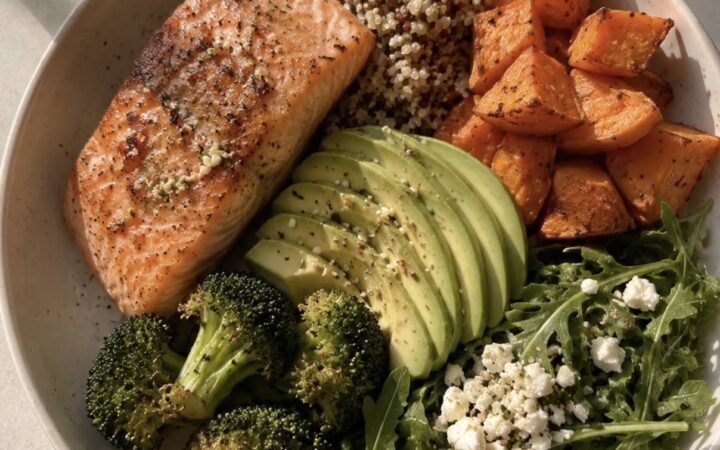
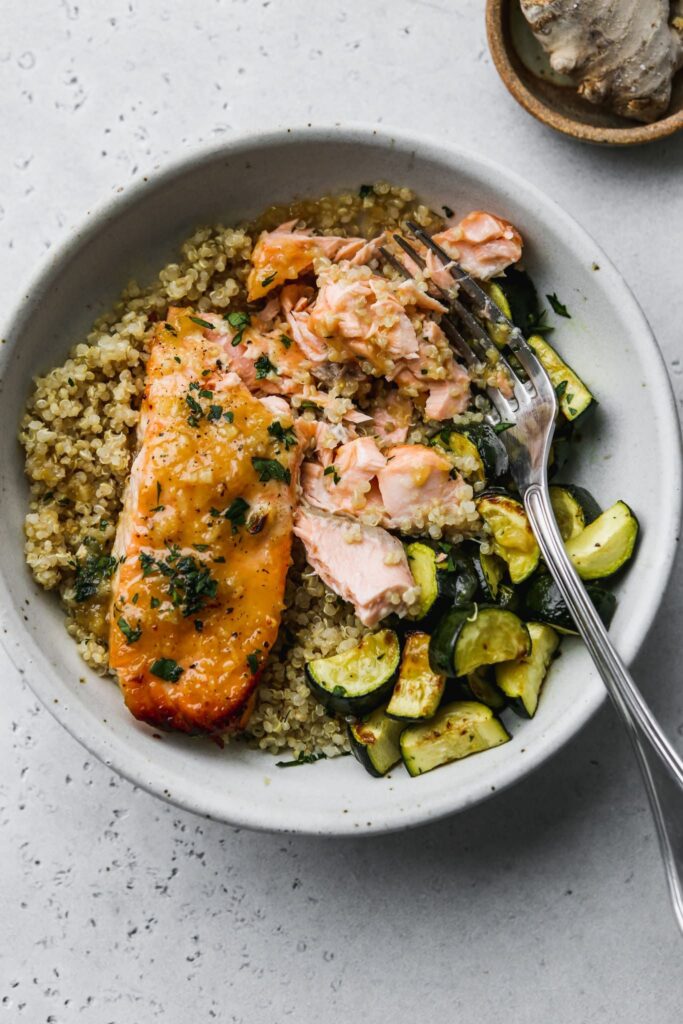
The problem with weeknight salmon is blandness or overcooked dry fillets. This Baked Ginger Miso Salmon solves both with a deeply savory glaze that caramelizes under high heat, locking in moisture.
Advertisements1
Miso paste delivers umami, fresh ginger adds a bright kick, and a touch of maple syrup balances the saltiness. The result is a restaurant-quality dish that comes together in one bowl and one sheet pan.
I've tested this with both wild and farmed salmon; both work, but adjust cooking time slightly for thicker cuts.
Why You'll Love This Recipe
About the Ingredients
4 (6 oz / 170g) salmon fillets, skin on
Look for fresh, sustainable salmon. If using frozen, thaw overnight in the fridge. You can use skinless if preferred, but skin helps keep the fish moist.
3 tablespoons (45g) white miso paste
White miso is mild and sweet. If you only have red miso, use 2 tablespoons and add a bit more maple syrup to balance saltiness.
2 tablespoons (30ml) low-sodium soy sauce
Use tamari for gluten-free. Regular soy sauce works too, but reduce salt elsewhere.
1 tablespoon (15ml) maple syrup
Honey or brown sugar can substitute. Maple adds a subtle smokiness.
1 tablespoon (15ml) rice vinegar
Unseasoned rice vinegar is best. Apple cider vinegar works in a pinch.
1 tablespoon (15g) fresh ginger, grated
Use a microplane for fine grating. Ground ginger won't give the same fresh punch.
2 cloves garlic, minced
Fresh garlic is essential. Pre-minced jarred garlic can be used in a pinch.
1 tablespoon (15ml) toasted sesame oil
Adds nuttiness. Regular sesame oil is less intense; you may need 1.5 tablespoons.
2 green onions, thinly sliced, for garnish
Optional but recommended for freshness and color.
1 tablespoon (8g) sesame seeds, for garnish
Toasted sesame seeds add crunch. Black or white both work.
Tips & Tricks
Don't marinate longer than 30 minutes
The miso and soy can start to cure the fish, making it too salty and mushy.
Use an instant-read thermometer
For perfectly flaky salmon, cook to 125°F (52°C) in the thickest part; it will carry over to 130°F (54°C).
- Pat the salmon dry before applying the glaze: Excess moisture prevents caramelization and leads to steaming.
Pro Tips
Step-by-Step Instructions
1. Preheat and prep
Preheat oven to 400°F (200°C). Line a baking sheet with parchment paper. Pat salmon fillets dry with paper towels.
2. Make the glaze
In a small bowl, whisk together miso paste, soy sauce, maple syrup, rice vinegar, grated ginger, minced garlic, and sesame oil until smooth.
3. Coat the salmon
Place salmon fillets skin-side down on the prepared baking sheet. Brush the glaze generously over the top and sides of each fillet, reserving a little for brushing later.
4. Bake the salmon
Bake for 12-15 minutes, depending on thickness, until the glaze is bubbling and the salmon is opaque and flakes easily with a fork. For a more caramelized top, switch to broil for the last 2 minutes, watching carefully.
5. Garnish and serve
Remove from oven and let rest for 5 minutes. Sprinkle with sliced green onions and sesame seeds. Serve hot with rice or vegetables.
Delicious Variations
Spicy
Add 1-2 teaspoons sriracha or chili flakes to the glaze for heat.
Citrus
Replace rice vinegar with fresh orange juice and add 1 teaspoon orange zest.
Gluten-free
Use tamari instead of soy sauce and ensure miso is gluten-free (many are).
How to Store Baked Ginger Miso Salmon
Refrigerator
Store cooked salmon in an airtight container for up to 3 days.
Freezer
Freeze cooked salmon in a freezer-safe container for up to 2 months. Thaw overnight in the fridge.
Reheating
Reheat in a 300°F (150°C) oven for 8-10 minutes, or microwave on medium power for 1-2 minutes, until just heated through. Avoid overcooking.
Frequently Asked Questions
Q: Can I use frozen salmon for this recipe?
Yes, thaw frozen salmon completely in the refrigerator overnight. Pat dry thoroughly before glazing to ensure proper caramelization.
Q: What can I substitute for miso paste?
If you don't have miso, use 1 tablespoon of soy sauce plus 1 tablespoon of tahini or smooth peanut butter for a similar umami richness.
Q: How do I know when the salmon is done?
The salmon is done when it reaches an internal temperature of 125°F (52°C) and flakes easily with a fork. It will continue cooking as it rests.
Q: Can I grill this instead of baking?
Yes, grill over medium-high heat for 4-5 minutes per side, brushing with extra glaze. Watch for flare-ups from the sugar.
Ready to elevate your weeknight dinner? Try this Baked Ginger Miso Salmon tonight and let me know how it turns out in the comments below. Stay focused, stay light.
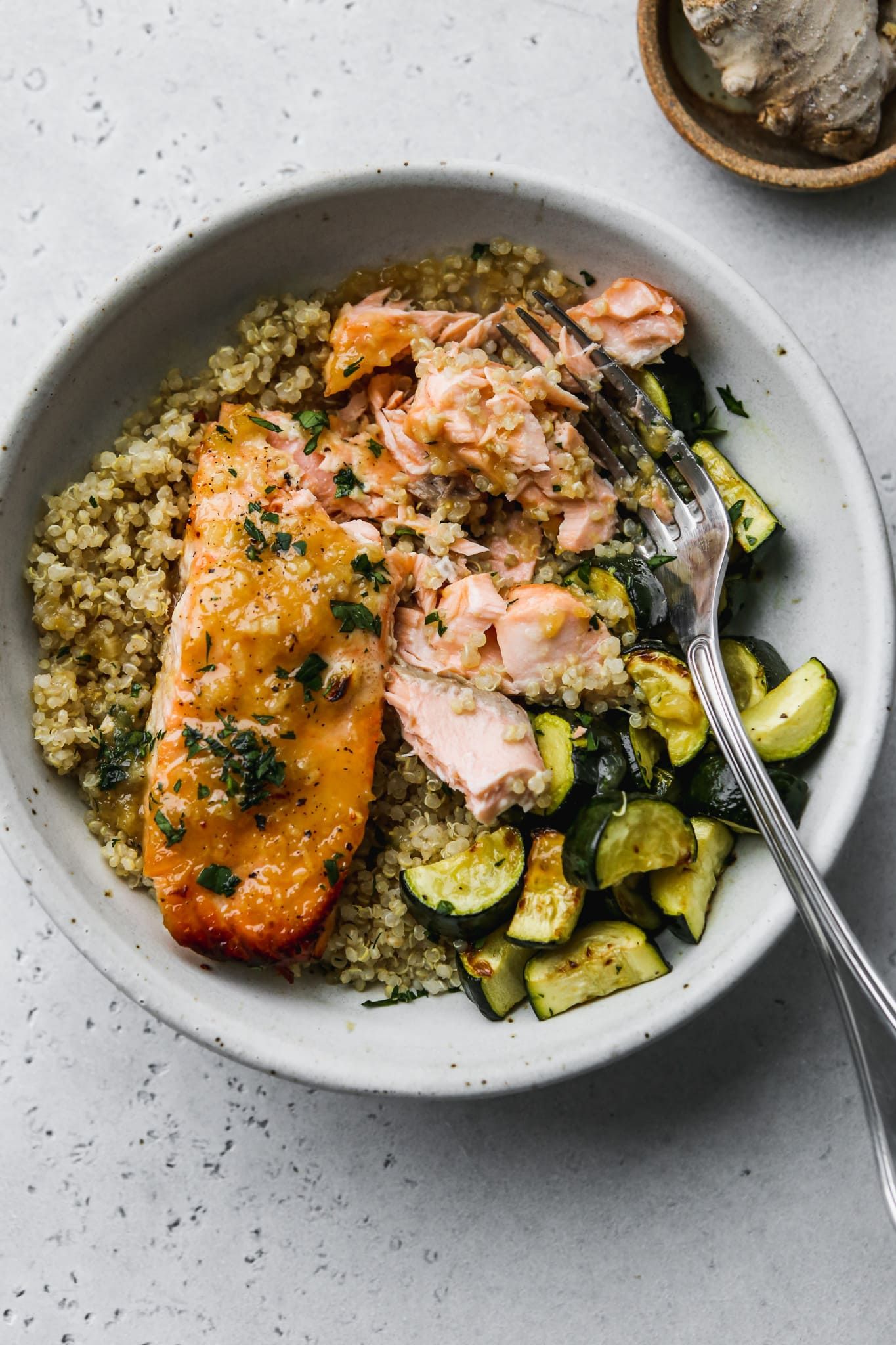
Baked Ginger Miso Salmon
Baked Ginger Miso Salmon with a savory-sweet glaze, flaky fish, and caramelized edges, ready in 30 minutes.
🧂 Ingredients
- 4 (6 oz / 170g) salmon fillets, skin on
- 3 tablespoons (45g) white miso paste
- 2 tablespoons (30ml) low-sodium soy sauce
- 1 tablespoon (15ml) maple syrup
- 1 tablespoon (15ml) rice vinegar
- 1 tablespoon (15g) fresh ginger, grated
- 2 cloves garlic, minced
- 1 tablespoon (15ml) toasted sesame oil
- 2 green onions, thinly sliced, for garnish
- 1 tablespoon (8g) sesame seeds, for garnish
📋 Instructions
- 1Preheat and prep — Preheat oven to 400°F (200°C). Line a baking sheet with parchment paper. Pat salmon fillets dry with paper towels.
- 2Make the glaze — In a small bowl, whisk together miso paste, soy sauce, maple syrup, rice vinegar, grated ginger, minced garlic, and sesame oil until smooth.
- 3Coat the salmon — Place salmon fillets skin-side down on the prepared baking sheet. Brush the glaze generously over the top and sides of each fillet, reserving a little for brushing later.
- 4Bake the salmon — Bake for 12-15 minutes, depending on thickness, until the glaze is bubbling and the salmon is opaque and flakes easily with a fork. For a more caramelized top, switch to broil for the last 2 minutes, watching carefully.
- 5Garnish and serve — Remove from oven and let rest for 5 minutes. Sprinkle with sliced green onions and sesame seeds. Serve hot with rice or vegetables.

Kenji covers tech productivity and digital minimalism for remote workers. He writes about streamlining workflows and cutting digital clutter with a focus on mental clarity, not just efficiency.